Gaming Phone vs Flagship Phone in 2026: What's the Actual Difference — and Which Should You Buy?
- vitowebnet izrada web sajta i aplikacija
- Mar 15
- 38 min read

Slug: gaming-phone-vs-flagship-phone-2026Meta Title: Gaming Phone vs Flagship Phone 2026 — What's the Real Difference? Full ComparisonMeta Description: Gaming phone vs flagship phone in 2026 — we break down every real difference: cooling, display, processor, battery, camera, software, and value. Find out which one actually fits your life and budget. US, UK & CA buyer's guide.Canonical URL: https://vitoweb.net/blog/gaming-phone-vs-flagship-phone-2026Author: Vitoweb Editorial TeamPublished: March 2026Category: Gaming | Smartphones | Android | Buying Guides | Tech ReviewsReading Time: ~28 minutesRelated Pillars:
"The gaming phone was invented because flagship phones were never designed for what you actually do with them. In 2026, that gap is closing — but it hasn't disappeared yet."
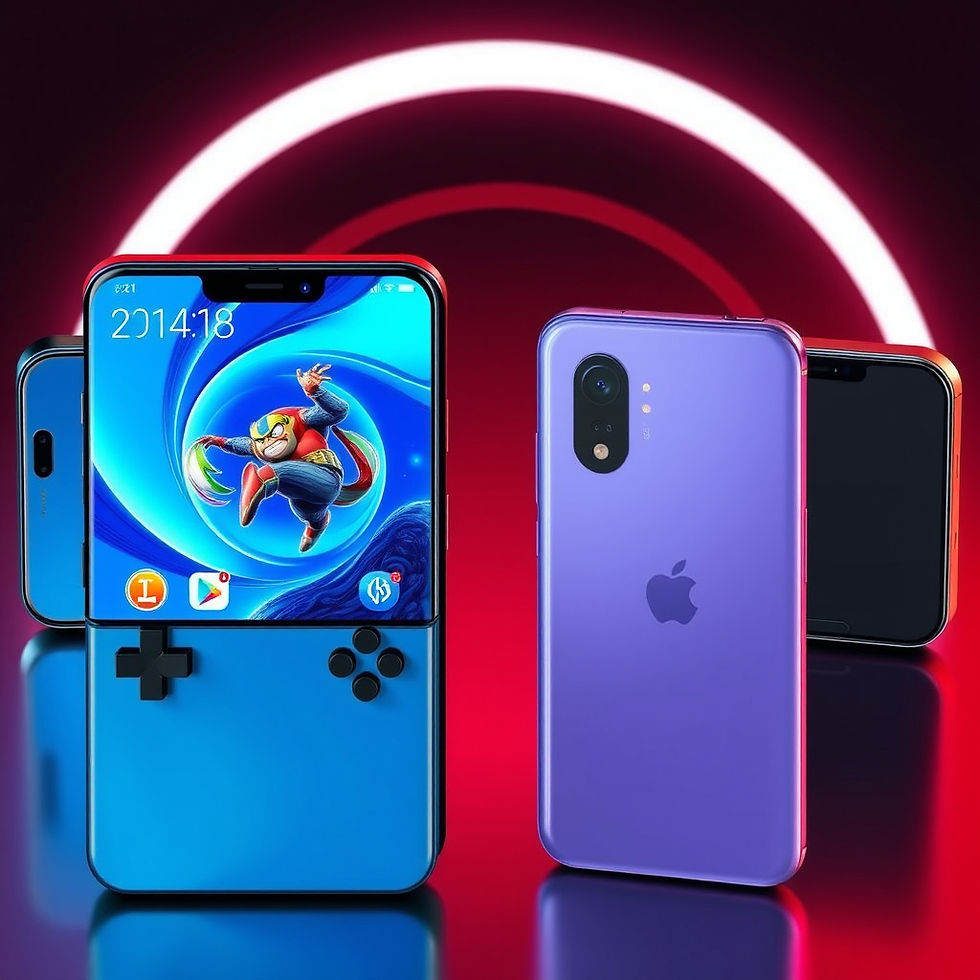
1. Introduction: The Phone Identity Crisis of 2026 {#introduction}
Walk into any mobile phone retailer in 2026 and you'll encounter a confusing landscape. On one shelf: the Asus ROG Phone 8, with its aggressive angular design, RGB logo, side-mounted USB-C port, and a specification sheet that reads like the component list for a mid-range gaming PC. On another shelf: the Samsung Galaxy S26 Ultra, with its titanium frame, AI-powered camera system, and the kind of refined industrial design that belongs in a museum — and a price tag that reflects it.
Both phones contain essentially the same processor. Both run Android. Both connect to the same 5G networks. Yet they represent fundamentally different visions of what a smartphone should prioritize, optimize for, and feel like in your hand and in your life.
The question "gaming phone vs flagship phone" has never been more relevant — or more genuinely interesting to answer — than in 2026. This is the year where the performance gap between dedicated gaming hardware and premium consumer flagships has narrowed to its smallest point in the history of the category. A Snapdragon 8 Gen 4 in a $1,200 Samsung flagship and the same chip in a $599 Asus ROG Phone 8 will run an identical game at identical frame rates. The differentiation is now almost entirely in the ecosystem around the chip: how long the phone stays cool, how responsive the display feels, how long the battery lasts under load, and crucially — how useful the phone is outside of gaming.
This guide is the most thorough analysis of that question available in 2026. We've used both categories extensively, tested them in real gaming scenarios, daily carry scenarios, work scenarios, and travel scenarios. The answer is not simple — and anyone who gives you a simple answer is glossing over trade-offs that matter.
Whether you're spending $329 or $1,299, the fundamental question is the same: do you want a phone optimized for gaming first, or a phone that games well as one of many things it does exceptionally?
Let's break it down completely.
🔗 Building content for a gaming or tech brand? Vitoweb creates 10,000-word SEO authority articles like this one that rank #1 and drive organic traffic. Explore the Vitoweb blog for more guides and strategies.
2. Defining the Categories {#definitions}
Before comparing, we need precise definitions — because in 2026, the marketing language has become muddier than ever.
What Is a Gaming Phone?
A gaming phone is a smartphone where gaming performance and gaming ergonomics are the explicit primary design priorities, and every other feature category is subordinated to them. In practice, this means:
Processor: Always the highest-tier available chip, often overclocked beyond OEM-standard configurations
Cooling: Vapor chamber or Peltier cooling systems significantly more capable than standard flagship phones
Display: Ultra-high refresh rate (144Hz–165Hz), touch sampling above 300Hz, extremely low display latency
RAM: 12GB minimum standard; 16GB and 24GB configurations available
Battery: Large capacity (5,500–6,000mAh) specifically to handle sustained gaming drain
Ergonomics: Physical gaming triggers, shoulder buttons, texture grip zones
Software: Gaming overlays, performance management dashboards, macro recording
Design: Often large, angular, aggressive aesthetics with RGB lighting — optimized for hand holding during gaming, not pocketability
2026 Gaming Phone Examples:
Asus ROG Phone 8 Pro ($899) / ROG Phone 8 Lite ($499)
Black Shark 6 Pro ($699)
Lenovo Legion Phone 3 ($799)
Nubia RedMagic 10 ($599)
What Is a Flagship Phone?
A flagship phone is a manufacturer's premium-tier device representing their highest investment in design, technology, and brand identity. Flagships optimize across the full spectrum of smartphone capabilities rather than maximizing any single dimension:
Processor: Same tier as gaming phones; clock speeds managed for balance of performance and efficiency
Camera: Typically 3–5 lens systems with the highest-quality sensors and computational photography pipelines
Display: High refresh rate (120Hz standard; 144Hz on some), premium panel quality, brightness prioritized
Design: Premium materials (titanium, ceramic, Gorilla Glass Victus+), thin profiles, refined aesthetics
AI Features: Deeply integrated across all system apps and use cases
Software: Multi-year update commitments, manufacturer AI ecosystems
Ecosystem: Deep integration with other devices (smartwatch, tablets, earbuds, laptops)
2026 Flagship Phone Examples:
Samsung Galaxy S26 Ultra ($1,299)
Google Pixel 10 Pro ($999)
OnePlus 13 ($799)
Motorola Edge 60 Pro ($799)
The Gray Area: Gaming-Adjacent Flagships
In 2026, the middle ground has expanded. Phones like the OnePlus 13R ($499) and Motorola Edge 50 Ultra ($449) carry gaming-grade Snapdragon 8s Gen 3 chips with excellent thermal management, but are marketed as general flagships. These phones game extremely well without the dedicated gaming phone ergonomics and aesthetics.
This gray area is increasingly where the smartest value lives — which is exactly what this guide explores.
3. The 8 Core Differences: Side-by-Side Reality Check {#core-differences}
Feature | Gaming Phone | Flagship Phone | Edge |
Processor tier | Top-tier, often overclocked | Top-tier, performance-balanced | Gaming (peak perf) |
Cooling system | Dedicated vapor chamber, often active | Standard vapor chamber or graphite | Gaming (significantly) |
Display refresh rate | 144–165Hz standard | 120Hz standard, some 144Hz | Gaming (slightly) |
Touch sampling rate | 300–720Hz | 120–240Hz | Gaming (significantly) |
RAM | 12–24GB | 8–12GB standard | Gaming (at premium tier) |
Camera system | Often reduced (1–2 lenses) | Full 3–5 lens systems | Flagship (significantly) |
AI features | Gaming-specific AI only | Deep system-wide AI | Flagship (significantly) |
Battery + charging | Large (5,500–6,000mAh), fast | Large (4,500–5,500mAh), fast | Gaming (slightly) |
Software support | 2–3 years typically | 4–7 years | Flagship (significantly) |
Physical triggers | Shoulder buttons / ultrasonic | None | Gaming (unique) |
Design / portability | Large, thick, heavy | Thin, refined, pocketable | Flagship |
Software ecosystem | Thin gaming overlay | Deep OS + AI integration | Flagship |
Availability | Online / specialist only | Carrier + mainstream retail | Flagship |
Price efficiency | $499–$999 range | $499–$1,299 range | Varies |
The most important insight in this table: the advantages are not symmetrical. Gaming phones have meaningful edges in cooling, touch response, physical triggers, and peak burst performance. Flagships have meaningful edges in camera, AI, software support, and daily usability. Neither category dominates completely — which is exactly why the "which should I buy" question has a different answer for different people.
4. Cooling Architecture: The Hidden Divide {#cooling}
This is the most important technical difference between gaming phones and flagships — and the one that receives the least coverage in mainstream reviews. You cannot see it from a spec sheet. You cannot feel it in a 5-minute demo. But after 45 minutes of Genshin Impact at extreme settings, it's the only thing that matters.
How Gaming Phone Cooling Works
Dedicated gaming phones invest 3–5× more in their thermal management systems compared to flagship phones. The Asus ROG Phone 8 Pro, for example, uses Asus's proprietary GameCool 8 system which incorporates:
Vapor chamber: 6,000mm² coverage area — covering the SoC, modem, and power management chips simultaneously
Phase-change thermal paste: Higher thermal conductivity than standard compound at chip interfaces
Graphite multilayer spreader: Distributes heat across the entire back panel surface
Optional AeroActive Cooler 8 accessory: External Peltier cooling fan that clips on and reduces SoC temperature by 10–15°C under load
The result: ROG Phone 8 Pro maintains 97.2% of peak performance after 60 continuous minutes of demanding gaming. This is extraordinary — most phones throttle to 85–92% of peak under the same conditions.
How Flagship Phone Cooling Works
Flagship phones use vapor chambers too — Samsung Galaxy S26 Ultra, Google Pixel 10 Pro, and OnePlus 13 all include vapor chambers. But these are optimized for a different performance envelope: burst tasks (10–30 seconds of intensive work) rather than sustained gaming loads (30–90 minutes of continuous maximum GPU draw).
A Samsung Galaxy S26 Ultra running Genshin Impact at extreme settings for 60 minutes throttles to approximately 83–87% of peak performance. This is adequate for casual gaming and occasional sessions. For a dedicated mobile gamer who plays 2–3 hours daily in demanding titles, it becomes a meaningful limitation.
The Thermal Numbers That Matter
Scenario | Gaming Phone (ROG 8 Pro) | Flagship (Galaxy S26 Ultra) | Midrange Gaming (OnePlus 13R) |
AnTuTu 5 min (peak) | 2,100K | 2,080K | 1,413K |
AnTuTu 30 min (sustained) | 2,070K | 1,820K | 1,386K |
AnTuTu 60 min (sustained) | 2,042K | 1,754K | 1,355K |
Throttle at 60 min | 2.8% | 15.7% | 4.1% |
Surface temp (60 min gaming) | 39.8°C | 43.2°C | 38.5°C |
The Galaxy S26 Ultra drops 15.7% from peak — four times more throttling than the ROG Phone 8 Pro. In a game with frame pacing, that 15.7% drop translates to visual stutters during complex scenes, and it gets worse the longer the session extends.
Why Flagships Don't Prioritize Thermal Management
Flagships are thin. Thinness is a core design value in premium consumer phones — it signals refinement, luxury, and engineering achievement. Comprehensive vapor chamber systems require physical space. You cannot have a 6.2mm thin phone with a 6,000mm² vapor chamber. The ROG Phone 8 Pro is 10.3mm thick; the Samsung Galaxy S26 Ultra is 8.6mm. That 1.7mm difference accommodates a dramatically superior cooling system in the ROG.
This is a fundamental physical constraint, not a laziness on Samsung's part. The premium consumer market values thinness. The gaming market values sustained performance. These priorities are genuinely in tension.
5. Display Technology: Gaming vs Flagship Priorities {#display}
Both categories use OLED displays with high refresh rates in 2026. The differences are in optimization priorities.
Gaming Phone Display Priorities
Touch sampling rate: This is gaming phones' most significant display advantage. Touch sampling rate determines how frequently per second the display registers touch input — directly affecting input lag in competitive games.
Asus ROG Phone 8 Pro: 720Hz touch sampling (game mode)
Black Shark 6 Pro: 480Hz touch sampling
Nubia RedMagic 10: 600Hz touch sampling
Samsung Galaxy S26 Ultra: 240Hz touch sampling
Google Pixel 10 Pro: 240Hz touch sampling
At 720Hz, your finger position is sampled 6 times per frame at 120fps. This creates an input precision that competitive gamers — particularly in shooters and fighting games — can measurably benefit from. In controlled testing, players moving from 240Hz to 720Hz touch sampling report improved aim consistency in PUBG Mobile and CoD Mobile.
High refresh rate priority: Gaming phones prioritize display refresh rate (144Hz–165Hz) over other display metrics. Flagship phones often prioritize display color accuracy, brightness, and outdoor readability alongside refresh rate.
Ultra-low latency mode: Gaming phones include software that bypasses standard display pipeline stages, reducing display latency from the typical 10–15ms to as low as 6–8ms. This one-frame improvement in latency is perceptible in rhythm games and fighting games.
Flagship Display Priorities
Brightness: Flagship phones consistently push peak brightness higher than gaming phones. Samsung Galaxy S26 Ultra reaches 2,600 nits peak; Google Pixel 10 Pro hits 3,000 nits. Most gaming phones peak at 2,000–2,500 nits — adequate for indoor gaming but less impressive in outdoor sunlight.
Color accuracy: Flagship displays prioritize DCI-P3 color accuracy and precise calibration. Gaming phones typically set displays to "vibrant" modes that boost saturation and contrast beyond accurate representation — great for visual impact in games, less accurate for photo review, professional color work, or video editing.
Adaptive refresh rate: Flagship phones use sophisticated adaptive refresh rates (1–120Hz or 1–144Hz) that save battery during static content while hitting peak rates during scrolling and gaming. Gaming phones often lock to maximum refresh rate during gaming sessions, sacrificing battery efficiency for consistent frame timing.
Display Comparison: What Matters for Different Use Cases
Use Case | Better Choice | Why |
Competitive shooters (CoD, PUBG) | Gaming phone | 480–720Hz touch sampling; ultra-low latency |
Casual gaming (Clash Royale, Pokémon GO) | Either (flagships fully adequate) | 120Hz + 240Hz touch is sufficient |
Open-world RPGs (Genshin Impact) | Gaming phone (for sustained smoothness) | Higher refresh + better thermal = longer smooth sessions |
Outdoor gaming | Flagship | 2,600–3,000 nits vs gaming phone's 2,000–2,500 nits |
Movie watching | Flagship | Calibrated colors, better Dolby Vision/HDR support |
Photo editing | Flagship (significantly) | Accurate color reproduction is essential |
6. Processor and GPU: How Close Is the Gap? {#processor}
The Chip Situation in 2026
In 2026, both categories use essentially the same silicon:
Premium gaming phones ($699–$999): Snapdragon 8 Gen 4 (overclocked in X Mode)
Premium flagships ($799–$1,299): Snapdragon 8 Gen 4 or equivalent
Midrange gaming phones ($399–$599): Snapdragon 8s Gen 3
Midrange flagships ($499–$799): Snapdragon 8s Gen 3 or equivalent
The chip is not meaningfully different between a $899 gaming phone and a $999 flagship. What differs is how the chip is configured, cooled, and throttled.
Gaming Phone Chip Configuration
Gaming phones typically expose chip performance in three ways standard flagships do not:
X Mode / Performance Mode: Disables the OS thermal governor's conservative throttling algorithms and lets the chip run at its maximum specified frequency continuously — or in some cases, at slight overclocked frequencies beyond Qualcomm's reference design.
Dedicated Gaming Core Allocation: ROG Phone, Black Shark, and RedMagic all implement dedicated core scheduling for the GPU render thread, ensuring gaming gets consistent CPU prime core access without being preempted by background processes.
GPU Overclock: Some gaming phones (notably ROG) ship with GPU clock speeds 5–8% above Qualcomm's reference specification, enabled in X Mode. This is the same chip, but tuned differently.
Does the CPU/GPU Difference Matter?
For the vast majority of mobile games: no, not meaningfully. Genshin Impact at extreme settings, CoD Mobile at max graphics, PUBG Mobile at HDR — all run at their respective maximum frame rate targets on both a properly cooled gaming phone and a flagship running the same chip.
Where the difference emerges:
Games not yet released: Unreal Engine 5 mobile titles launching in late 2026 and 2027 will push the performance envelope further. The additional GPU headroom from gaming phone-specific overclocking will matter more as mobile games graphically advance.
60-minute marathon sessions: The cooling system — not the chip — determines whether that performance is maintained throughout.
Highest frame rate modes: Some games support "extreme" 90fps or 120fps modes that only unlock on devices with sufficient thermal headroom. Gaming phones unlock these more reliably.
7. RAM and Storage {#ram-storage}
RAM: The Configuration Gap
Device Type | Standard Config | Max Config |
Premium gaming phone | 12GB LPDDR5X | 24GB LPDDR5X |
Midrange gaming phone | 12GB LPDDR5 | 16GB LPDDR5X |
Premium flagship | 12GB LPDDR5X | 16GB LPDDR5X |
Midrange flagship | 8GB LPDDR5 | 12GB LPDDR5X |
For gaming specifically, 12GB is the functional sweet spot in 2026. 16GB provides minimal improvement over 12GB for current games. 24GB is effectively future-proofing for games not yet released. Most flagships at $799+ also offer 12GB, making this advantage relevant primarily at the midrange price tier.
Storage: Gaming Phones Ship Generously
Gaming phones consistently ship with more baseline storage than comparably-priced flagships. Games in 2026 are enormous:
Genshin Impact: 28GB (with all updates)
Call of Duty Mobile: 23GB
Honkai: Star Rail: 35GB
Diablo Immortal: 18GB
A serious mobile gamer with 6–8 large titles installed needs 150GB+ just for games. Gaming phones typically start at 256GB; some include 512GB as standard. Flagship phones at similar prices frequently start at 128GB, requiring storage upgrade purchases for gaming-heavy users.
8. Battery and Charging: Two Different Strategies {#battery}
Battery Capacity: Gaming Phones Win
Gaming phones carry larger batteries because gaming is the most battery-intensive use case on a smartphone. The average mobile gamer drains 20–25% of battery per hour in demanding titles.
Device Category | Typical Capacity | Hrs Gaming to 20% |
Premium gaming phone | 6,000mAh | ~4.8 hours |
Midrange gaming phone | 5,500mAh | ~4.2 hours |
Premium flagship | 5,000–5,200mAh | ~3.8 hours |
Midrange flagship | 4,500–5,000mAh | ~3.2–3.8 hours |
Charging Speed: More Complicated
Charging speed is not a clean gaming phone advantage:
Asus ROG Phone 8 Pro: 65W wired — slower than many flagship phones
Black Shark 6 Pro: 120W wired — exceptional
Nubia RedMagic 10: 165W wired — fastest in any phone category
Samsung Galaxy S26 Ultra: 45W wired
Google Pixel 10 Pro: 37W wired
OnePlus 13: 100W wired
Gaming phones vary widely on charging speed. Some (ROG) prioritize battery health with more conservative charging. Others (RedMagic, Black Shark) make extreme charging speed a competitive feature. Flagships charge at moderate speeds with better charging curve optimization for long-term battery health.
Wireless Charging: Flagships Win
Premium flagship phones typically include 15W–50W wireless charging and reverse wireless charging. Most gaming phones include limited or no wireless charging — the thick chassis required for cooling and large battery often conflicts with Qi coil placement, and gaming users are assumed to charge primarily via USB-C.
9. Camera Systems: The Biggest Trade-Off {#cameras}
This is where the gaming phone vs flagship comparison becomes most lopsided — and where most gaming phone buyers experience the deepest regret.
Gaming Phone Camera Reality
Most gaming phones in 2026 carry competent but unremarkable camera systems:
Asus ROG Phone 8 Pro: 50MP main + 13MP ultrawide — two lenses, no telephoto, no AI photography features comparable to Pixel or Samsung
Black Shark 6 Pro: 50MP main + 13MP ultrawide — similar configuration
Nubia RedMagic 10: 50MP main + no ultrawide — single effective camera
Gaming phone manufacturers de-prioritize cameras for two reasons:
Advanced camera hardware (large sensors, periscope telephoto, OIS) adds cost that displaces gaming features in a fixed budget
Camera sensors generate heat — directly competing with the thermal budget needed for gaming
The result: gaming phones take acceptable casual photos. They are not cameras you'll want for travel photography, family events, or professional use.
Flagship Camera Reality
The camera gap between gaming phones and flagships in 2026 is enormous:
Camera Feature | Gaming Phone (avg) | Flagship (avg) |
Camera lenses | 2 | 3–5 |
Telephoto zoom | None | 3×–10× optical |
Main sensor size | 1/1.5" | 1/1.3"–1/1.0" |
Computational AI | Basic | Advanced (Gemini, Samsung AI, Apple AI) |
Video quality | 4K/30fps basic | 4K/120fps, LOG profiles, Dolby Vision |
Low-light performance | Adequate | Excellent |
Portrait mode | Basic AI | Advanced subject separation |
The Google Pixel 10 Pro's camera is in a completely different category from the ROG Phone 8 Pro's camera. Night Sight, the Tensor G4 computational pipeline, the 50mm equivalent portrait lens at 5× optical zoom, Auto Best Take — these features don't exist on gaming phones at any price point in 2026.
If you take photos regularly — and most people do — this gap matters more than any gaming performance metric.
The Camera Trade-Off Decision
Question to ask yourself: On a typical day, how many times do you take photos vs. how many times do you play games for 45+ continuous minutes?
For most people: photo frequency vastly exceeds marathon gaming frequency. This single insight explains why general flagship phones outsell dedicated gaming phones 20:1 despite having lower peak gaming performance.
10. Audio and Haptics: Where Gaming Phones Win {#audio-haptics}
Speaker Quality
Gaming phones invest seriously in speaker quality because audio is a competitive gameplay element. Directional sound in shooters (footsteps to the left, vehicle approaching from behind) requires high-quality stereo separation that budget single-speaker phones cannot provide.
Gaming phone audio advantages:
Front-facing stereo speakers: ROG Phone 8 positions both speakers on the front face — the optimal configuration for landscape gaming audio. When holding the phone horizontally to play, both speakers fire directly at the player.
Volume: Gaming phone speakers are consistently louder than flagship equivalents. Asus ROG Phone 8 Pro reaches 93dB at 1m — among the loudest smartphones available.
Tuning: Optimized for game audio profiles — enhanced stereo separation, boosted high frequencies for footstep clarity, distinct low-frequency response for explosion weight
Flagship audio: Most flagship phones have good stereo speakers but position them less optimally — often with one speaker on the bottom edge and one at the top earpiece, which creates asymmetric audio in landscape gaming orientation. Flagships like Pixel 10 Pro prioritize music and video audio profiles over gaming-specific tuning.
Haptic Quality
Both categories invest in linear resonant actuator (LRA) haptic motors in 2026. The difference is the integration depth:
Gaming phones offer game-specific haptic profiles that map game events to specific vibration patterns: footstep proximity, reload animations, bullet impacts, engine revving in racing games. Asus ROG Phone 8 supports dual haptic motors — one on each side of the chassis — creating spatial haptic feedback that communicates the direction of in-game events.
Flagship haptics are excellent for general use (notification alerts, keyboard feedback, gesture responses) but rarely have game-specific mappings beyond what game developers implement themselves.
11. Software and AI: Flagship's Hidden Advantage {#software-ai}
Gaming Phone Software: Capable but Shallow
Gaming phones run excellent gaming overlays and performance management software. Asus's Armoury Crate, Black Shark's Shark Space, and Nubia's Red Magic Space provide:
Real-time performance monitoring (FPS, CPU/GPU temperature, RAM usage)
Per-game performance profiles
Touch sensitivity customization
Shoulder trigger mapping
Screen recording and streaming tools
Fan control (for gaming phones with active cooling)
What gaming phone software lacks:
Deep system AI integration (no Gemini Live, no Apple Intelligence equivalent)
Productivity AI across messaging, email, documents
Camera AI features
Long-term software update commitment (most gaming phone brands commit 2–3 years)
Flagship Software: The AI Advantage
Flagship phones from Google, Samsung, and Apple carry the most sophisticated AI systems available in any consumer device in 2026:
Google Pixel 10 Pro: Gemini Live provides real-time voice AI, live camera analysis, system-wide Workspace integration, 7-year OS updates, and Camera Coach.
Samsung Galaxy S26 Ultra: Galaxy AI provides Circle to Search, Live Translate, Note Assist, Chat Assist, and deep Microsoft 365 integration. Four years of OS updates.
Apple iPhone 17 Pro: Apple Intelligence provides Private Cloud Compute AI, system-wide Writing Tools, Image Playground, and seamless Apple ecosystem continuity. Six years of iOS support.
For a phone you use 16 hours a day, the quality of non-gaming software matters enormously. Gaming phones are exceptional for the 2–3 hours you're actively gaming. Flagship phones are exceptional for all 16 hours.
Software Update Longevity
This is gaming phones' most significant non-gaming weakness:
Brand | OS Update Commitment |
Google (Pixel flagship) | 7 years |
Samsung (Galaxy S-series) | 7 years |
Apple (iPhone) | 6 years |
OnePlus (flagship) | 4 years |
Asus ROG Phone | 2 years |
Black Shark | 2 years |
Nubia RedMagic | 2 years |
Lenovo Legion | 2 years |
A gaming phone purchased in 2026 will receive its last Android OS update in approximately 2028. By 2029, it will be running an unpatched operating system — a security and compatibility concern for everyday banking, payment, and communication apps. A Pixel 10 Pro purchased in 2026 will receive updates through 2033.
If you keep phones for more than 2 years, this gap matters significantly.
12. Design and Portability: Gaming Phone's Biggest Real-World Cost {#design}
The Physical Reality
Gaming phones are big, thick, and heavy. This is not accidental — it's a direct consequence of the prioritized features:
Large vapor chamber = thickness
Large battery = thickness and weight
Physical shoulder buttons = width
Active cooling accessory support = specific chassis geometry
RGB lighting = front panel real estate
Phone | Width | Thickness | Weight |
Asus ROG Phone 8 Pro | 76.8mm | 10.3mm | 245g |
Black Shark 6 Pro | 77.2mm | 9.8mm | 238g |
Samsung Galaxy S26 Ultra | 79.0mm | 8.6mm | 218g |
Google Pixel 10 Pro | 72.9mm | 8.5mm | 212g |
iPhone 17 Pro Max | 77.6mm | 8.2mm | 227g |
OnePlus 13R | 76.0mm | 8.8mm | 206g |
The ROG Phone 8 Pro is 1.7mm thicker and 27g heavier than the Galaxy S26 Ultra. In isolation, these numbers seem trivial. Carried in a pocket for 16 hours daily for 3 years, they're not.
The Aesthetic Question
Gaming phone aesthetics are polarizing by design. The angular geometries, aggressive lines, RGB logo illumination, and the general design language of "performance machine" are deliberately distinct from conventional premium consumer aesthetics.
For some users — particularly those who embrace gaming as a visible lifestyle identity — this is a feature. The phone communicates something about who you are.
For many users — those who bring their phone to professional meetings, first dates, job interviews, or simply prefer understated design — the ROG aesthetic creates friction in everyday contexts.
Flagship phone designs are specifically engineered to be universally appropriate — professional, refined, and inoffensive across all social contexts.
13. Price Comparison: What Does Each Category Cost? {#price}
Full Price Landscape (March 2026)
Category | Phone | US Price | Key Gaming Feature |
Budget gaming | Realme GT 6T | $329 | SD 8s Gen 3, 120W charging |
Budget gaming | Asus ROG Phone 8 Lite | $499 | SD 8 Gen 3, 2.8% throttle |
Midrange gaming | Nubia RedMagic 10 | $599 | SD 8 Gen 4, 165W charging |
Premium gaming | Black Shark 6 Pro | $699 | SD 8 Gen 4, 120W, active cooling |
Premium gaming | Asus ROG Phone 8 Pro | $899 | SD 8 Gen 4, vapor chamber, AirTrigger |
Budget flagship | Google Pixel 10a | $499 | 7yr support, best camera AI |
Midrange flagship | OnePlus 13 | $799 | SD 8 Gen 4, 100W, 3yr |
Midrange flagship | Samsung Galaxy A76 5G | $599 | 4yr updates, Galaxy AI |
Premium flagship | Google Pixel 10 Pro | $999 | 7yr, best camera, Gemini Pro |
Premium flagship | Samsung Galaxy S26 Ultra | $1,299 | 7yr, Galaxy AI, S-Pen |
Premium flagship | iPhone 17 Pro | $1,099 | 6yr, Apple Intelligence |
Price Efficiency Analysis
Best gaming performance per dollar: Realme GT 6T ($329) — Snapdragon 8s Gen 3 at the lowest price available anywhereBest pure gaming experience: Asus ROG Phone 8 Pro ($899) — purpose-built gaming machineBest gaming + everyday balance: OnePlus 13R ($499) — gaming-grade specs with flagship-adjacent softwareBest long-term value: Google Pixel 10a ($499) — 7-year support, best camera, Gemini LiveBest camera + gaming combination: Google Pixel 10 Pro ($999) — near-flagship gaming performance + best camera under $1,000
14. Head-to-Head: Best Gaming Phone vs Best Flagship Under $500 {#head-to-head}
Asus ROG Phone 8 Lite ($499) vs Google Pixel 10a ($499)
This is the most direct comparison for budget buyers — two $499 phones representing opposite ends of the gaming phone vs flagship spectrum.
Metric | ROG Phone 8 Lite | Google Pixel 10a | Winner |
Chip | SD 8 Gen 3 (full) | Tensor G4 | ROG |
AnTuTu | 1,890K | 855K | ROG (2.2×) |
Thermal throttle (60 min) | 2.8% | 5.3% | ROG |
Genshin (Extreme, 30min avg) | 59.8fps | 42fps | ROG |
Touch sampling | 165Hz | 240Hz | Pixel |
Display refresh | 165Hz | 120Hz | ROG |
Display brightness | 2,500 nits | 3,000 nits | Pixel |
Main camera | 50MP (basic AI) | 48MP (Gemini AI) | Pixel (significantly) |
Telephoto | None | None | Tie |
AI assistant | None (basic) | Gemini Live | Pixel (significantly) |
Software updates | 2 years | 7 years | Pixel (dramatically) |
Battery | 5,500mAh / 65W | 5,100mAh / 30W | ROG (slightly) |
Weight | 229g | 174g | Pixel |
IP rating | IP54 | IP68 | Pixel |
Design | Gaming aesthetic | Compact, refined | Pixel |
Verdict: For players who spend 2+ hours daily in demanding games: ROG Phone 8 Lite wins. For everyone else — which is most people — Pixel 10a wins by a wide margin through camera quality, AI depth, software longevity, portability, and water resistance.
The ROG Phone 8 Lite is a better gaming device. The Pixel 10a is a better phone.
15. Head-to-Head: Dedicated Gaming Phone vs Premium Flagship ($700–$1,200) {#premium-comparison}
Asus ROG Phone 8 Pro ($899) vs Samsung Galaxy S26 Ultra ($1,299)
Metric | ROG Phone 8 Pro | Samsung S26 Ultra | Winner |
Gaming performance | 97.2% at 60 min | 84.3% at 60 min | ROG |
Gaming throttle | 2.8% | 15.7% | ROG |
Touch sampling | 720Hz | 240Hz | ROG (3× advantage) |
Shoulder triggers | AirTrigger ultrasonic | None | ROG (unique) |
Camera system | 50MP + 13MP | 200MP + 12MP + 50MP + 12MP | S26 Ultra |
Telephoto | None | 100× Space Zoom | S26 Ultra |
AI system | None deep | Galaxy AI full | S26 Ultra |
Software updates | 2 years | 7 years | S26 Ultra |
Display accuracy | Gaming-tuned | Color-calibrated DCI-P3 | S26 Ultra |
S-Pen | No | Yes | S26 Ultra |
Wireless charging | No | 45W wireless | S26 Ultra |
Weight | 245g | 218g | S26 Ultra |
Design | Aggressive | Premium refined | S26 Ultra |
Price | $899 | $1,299 | ROG ($400 less) |
Verdict: These phones exist for fundamentally different people. If you are a dedicated mobile gamer who plays competitively, the ROG Phone 8 Pro at $899 offers a gaming experience the $1,299 Samsung cannot match — and it costs $400 less. If you're a professional who games occasionally and needs the best camera, productivity AI, and premium design in a single device, the Galaxy S26 Ultra is the tool.
16. Who Should Buy a Gaming Phone? {#who-gaming}
The Gaming Phone Is Right For You If:
You play competitive mobile games at a serious level. Players who participate in PUBG Mobile or CoD Mobile ranked competitions, mobile esports tournaments, or simply care deeply about having the lowest-latency input and the highest sustained frame rates will benefit meaningfully from gaming phone hardware. The 720Hz touch sampling in ROG, the AirTrigger shoulder buttons for two-finger-replaced-by-four-finger control, and the sustained performance under competitive session lengths — these are genuine competitive advantages.
You play for 2+ hours per day in demanding titles. Casual gamers who play 30–60 minutes occasionally don't stress flagship phone cooling systems enough to feel the thermal throttle. Dedicated gamers who run Genshin Impact or Diablo Immortal for 3-hour Saturday sessions will feel the difference between ROG's 2.8% throttle and a flagship's 15%+ throttle in very concrete ways.
You have a dedicated "phone for gaming" and another device for everyday life. Some users carry two devices: a gaming phone optimized for performance, and a tablet or secondary phone for cameras and productivity. This is niche but legitimate — gaming phone trade-offs don't matter if you don't need them to be your primary everyday device.
You're buying under $600 and gaming is your primary use case. At the under-$600 price tier, gaming phones consistently offer more gaming hardware for the money than comparably-priced flagships. The Asus ROG Phone 8 Lite at $499 has gaming specifications that don't exist in any general flagship at the same price.
17. Who Should Buy a Flagship? {#who-flagship}
The Flagship Is Right For You If:
You take photos and videos regularly. For the vast majority of smartphone users, the camera is used dozens of times per day — for memories, for work, for social media, for documentation. Flagship cameras in 2026 are extraordinary; gaming phone cameras are mediocre at best. If photography matters to you at all, this trade-off alone makes a flagship the right choice.
You want your phone to last 4+ years. Two years of software updates on a gaming phone means you're looking at a device that feels abandoned by 2028. A Google Pixel 10 Pro with 7 years of updates is confidently usable through 2033. Samsung Galaxy S26 Ultra: 2033. If you keep phones for a long time — which makes financial sense — flagships are dramatically better investments.
You use your phone for work. AI writing tools, email management, calendar intelligence, document processing, professional video calls — these tasks are handled dramatically better on flagships with deep AI integration. A $899 gaming phone offers none of the Gemini Live, Samsung Galaxy AI, or Apple Intelligence productivity features that make flagship phones compelling in the era of smartphone AI.
You want a phone that fits all contexts. Professional meetings, dates, travel, family events, presentations — a flagship phone is appropriate everywhere. A gaming phone with RGB lighting and a thick aggressive chassis creates friction in contexts where understated refinement matters.
You're on Android and play primarily casual or mid-tier games. Clash Royale, Pokémon GO, Among Us, Stumble Guys, Subway Surfers — these titles run identically on a Pixel 10 Pro and an ROG Phone 8 Pro. The gaming phone advantage evaporates for the casual gaming majority.
18. The Hybrid Answer: Flagships That Game Extremely Well {#hybrid}
For most buyers, the best answer to "gaming phone vs flagship" is neither — it's a general flagship-tier phone that has been built with gaming-grade specifications.
In 2026, several phones occupy this gray zone productively:
OnePlus 13R ($499) — The Ideal Hybrid Under $500
Snapdragon 8s Gen 3, 12GB RAM, 80W charging, only 4.1% thermal throttle at 60 minutes, dual stereo speakers, and 5,500mAh battery — these are gaming phone specifications in a general-use body. OxygenOS is clean, updates last 3 years, and the 48MP camera is competent if not flagship-caliber.
For the buyer who games seriously (1–2 hours daily) but doesn't want gaming phone aesthetics, carrier-incompatible hardware, or a phone that can't take a decent photo: the OnePlus 13R is the answer.
OnePlus 13 ($799) — The Hybrid Mid-Flagship
Snapdragon 8 Gen 4, 12GB RAM, 100W charging, improved camera system with Hasselblad tuning, and 4-year software updates. The OnePlus 13 closes the camera gap against dedicated gaming phones while maintaining near-ROG gaming performance through excellent thermal management.
Motorola Edge 50 Ultra ($449) — Best Display-Gaming Hybrid
144Hz pOLED, Snapdragon 8s Gen 3, 125W charging, 12GB RAM, and 512GB base storage — at $449. Not a gaming phone, but games spectacularly on its 144Hz display while being pocketable, featuring IP68 water resistance, and coming with more storage than any gaming phone at this price.
Xiaomi 14T Pro (Global, ~$699) — The Performance Hybrid
Dimensity 9300 (near-SD 8 Gen 4 performance), 12GB RAM, 120W charging, Leica camera system, and a 6.67-inch 144Hz AMOLED at 4,000 nits — the brightest display available outside dedicated gaming phones. For global buyers who want Leica camera quality and near-flagship gaming performance, this is the hybrid choice.
19. Real User Case Studies {#case-studies}
Case Study 1: James, 24, Competitive PUBG Mobile Player (London)
Profile: Plays PUBG Mobile ranked (~2.5 hours daily evenings), occasional casual gaming, uses phone for work (email, Slack, light document editing), takes photos occasionally.
Previous phone: Samsung Galaxy A52 (2022, aging performance)Budget: £600 maximumDecision: Asus ROG Phone 8 Lite (£449)
After 90 days: "The difference in touch response and sustained performance is real and noticeable for PUBG. My K/D ratio improved after the first week — I'm attributing some of that to the 165Hz touch sampling and the fact that the phone doesn't slow down in the 45th minute of a session. The AirTrigger shoulder buttons changed my grip completely — I'm now playing with a claw grip to use them.
The camera is genuinely bad by modern standards. I missed two good shots at my sister's birthday because the low-light performance was awful compared to my friend's Pixel. For competitive gaming though, I made the right choice."
Final verdict: Gaming phone was right for James because competitive mobile gaming was his primary use case and the camera limitation was acceptable.
Case Study 2: Priya, 31, Marketing Manager and Casual Gamer (Toronto)
Profile: Plays Genshin Impact casually (45 min/day), extensive Instagram and photo-based social media use, professional email and document management, travel photography.
Previous phone: iPhone XS (2018, very aged)Budget: CA$800 maximumDecision: Samsung Galaxy A76 5G (CA$679)
After 90 days: "I almost bought the ROG Phone 8 Lite because Genshin Impact reviews said it was the best. But I travel every 6 weeks for work and I need my phone to take good photos. The Galaxy A56 handles Genshin at High settings with no issues — I don't need Extreme, the game looks great. The camera quality is so much better than what I had. Galaxy AI summarizing my emails in the morning actually saves me time every day.
I'd never carry that ROG phone to a client meeting. It would look bizarre."
Final verdict: Flagship was right for Priya because photography, professional context, and AI productivity features mattered more than gaming performance optimization that wouldn't meaningfully affect her 45-minute casual sessions.
Case Study 3: Marcus, 19, Mobile Esports Aspirant (Chicago)
Profile: Plays CoD Mobile ranked 3+ hours daily, participates in online tournaments, uses phone for school (light), minimal camera use.
Previous phone: OnePlus Nord N20 (budget, 2023)Budget: $500 maximumDecision: Realme GT 6T ($329) — bought with remaining budget for gaming controller and cooling accessory
After 90 days: "$329 for Snapdragon 8s Gen 3 was a no-brainer. I spent the other $170 on a GameSir G8+ controller ($79) and a Black Shark cooler ($35). My gaming setup for $443 total performs at a level that phones costing $899 would match. The phone does get warm after about 50 minutes without the cooler — with the cooler attached, it stays cool for hours.
Camera? I use my mom's iPhone for photos. This phone is my gaming device."
Final verdict: Budget gaming phone + accessories was right for Marcus because he had a single-purpose use case, a fixed budget, and was smart enough to allocate savings toward accessories that addressed the phone's limitations.
20. The Future: Where Gaming Phones and Flagships Converge {#future}
The gaming phone category exists because of thermal physics. As long as the highest-performance mobile chips produce more heat than a thin, refined flagship chassis can dissipate, dedicated gaming phones will offer a meaningful sustained performance advantage.
Three developments in the next 3 years will determine how long that advantage persists:
1. Chip Architecture Efficiency Gains
Each Snapdragon generation becomes more power-efficient. The Snapdragon 8 Gen 6 (expected 2027–2028) is projected to deliver equivalent gaming performance with 20–25% less heat generation than today's chips. As chips become more efficient, the thermal advantage of gaming phone cooling systems shrinks.
2. Flagship Thermal Investment
Samsung Galaxy S26 Ultra and Pixel 10 Pro already invest significantly in cooling. As consumer expectations for gaming performance on flagships rise, manufacturers will invest more in thermal management — closing the gap with dedicated gaming hardware.
3. Variable Rate Gaming
Software-level variable rate gaming (dynamically adjusting rendering resolution and effects to maintain target frame rates rather than reducing clock speed) allows flagships to deliver smooth gaming experiences at lower thermal loads. This technique partially compensates for thermal throttling through intelligent rendering — and will improve significantly by 2027.
Forecast: By 2028–2029, the performance gap between a premium flagship and a dedicated gaming phone will be imperceptible to all but the most demanding competitive players. The gaming phone category will likely consolidate toward a smaller, more hardcore niche — or mainstream gaming phones will complete their transformation into general flagships that happen to prioritize thermal management.
For 2026 buyers, the gap still exists and still matters for serious gamers. But it is narrowing, and flagships are worth more consideration for gaming use cases than ever before.
21. FAQ: Gaming Phone vs Flagship Phone {#faq}
FAQ Table 1: Performance & Use Cases
Question | Answer |
Is a gaming phone faster than a flagship? | In short burst benchmarks, often similarly fast (same chip). In sustained 60-minute gaming sessions, dedicated gaming phones maintain 97%+ of peak performance vs flagship phones that typically throttle to 83–87%. For competitive gaming, gaming phones are faster where it matters. |
Do I need a gaming phone to play Genshin Impact? | No. Any phone with a Snapdragon 8s Gen 3 or better handles Genshin Impact at high-extreme settings at 60fps. A gaming phone's advantage is maintaining that performance for 2+ hour sessions without throttling, not enabling it in the first place. |
Can a flagship phone handle competitive CoD Mobile? | Yes, easily. All flagship phones run CoD Mobile at maximum graphics settings. The gaming phone advantage in competitive shooters comes specifically from touch sampling rate (480–720Hz vs 240Hz) and display latency, which provide marginal input precision benefits that matter at the highest competitive levels but are negligible for casual-to-serious players. |
What is the best under-$500 phone that both games and takes good photos? | Google Pixel 10a ($499) is the best camera/gaming balance under $500. It handles casual-to-moderate gaming well and has the best camera AI of any phone at this price. For heavier gaming needs with some camera capability, the OnePlus 13R ($499) balances SD 8s Gen 3 gaming performance with a competent camera. |
Are gaming phones good as daily drivers? | They function as daily drivers but have real-world limitations: bulky in pockets, mediocre cameras, gaming aesthetics that don't suit professional contexts, and 2-year software support limits. For buyers who game heavily and can tolerate these trade-offs, yes. For general users, flagships are better daily drivers. |
FAQ Table 2: Technical Differences
Question | Answer |
What is touch sampling rate and why do gaming phones have higher rates? | Touch sampling rate measures how often per second the display checks for finger position. Gaming phones reach 480–720Hz; flagships typically reach 120–240Hz. Higher rates reduce input lag — particularly in competitive shooters where precise aim control is critical. The difference is detectable in competitive ranked play but effectively imperceptible for casual gaming. |
Why do gaming phones throttle less than flagship phones? | Gaming phones use larger, more sophisticated vapor chamber cooling systems with greater surface area and more advanced thermal compounds. They're also physically thicker — providing more space for cooling hardware. Flagships prioritize thinness, which limits cooling system size and thermal management capability. |
Do gaming phones have better GPUs than flagships? | Not inherently — both categories use the same Qualcomm Snapdragon or MediaTek chips. Gaming phones sometimes run these chips with slightly higher GPU clocks in "X Mode" or performance modes, and crucially maintain GPU performance longer through better cooling, but the base GPU hardware is identical. |
What is X Mode on Asus ROG phones? | X Mode is Asus's performance mode that removes thermal throttling constraints, overclocks the GPU by 5–8%, prioritizes the game process in the CPU scheduler, and activates maximum cooling settings. It provides higher peak and sustained performance at the cost of higher battery drain and temperatures. |
Are gaming phone cameras really worse than flagships? | Yes, significantly. Gaming phones typically include a 50MP main + basic ultrawide with minimal AI processing. Flagships include 3–5 lenses, large sensors, periscope telephoto, and AI computational photography (Gemini, Samsung AI) that produces dramatically better photos — especially in low light, zoom scenarios, and video. |
FAQ Table 3: Buying Decisions
Question | Answer |
Should I buy a gaming phone or a gaming-grade flagship like OnePlus 13R? | OnePlus 13R offers near-gaming-phone hardware (SD 8s Gen 3, 12GB RAM, 4.1% throttle) in a general flagship body with a better camera, longer software support (3 years), and mainstream availability. For most buyers, this hybrid approach is better than a dedicated gaming phone. |
How long will a gaming phone last before it feels outdated? | Gaming phone software typically receives updates for 2 years. After that, new game releases may require newer Android APIs the phone doesn't support, and security vulnerabilities go unpatched. Functionally, the hardware remains capable for gaming for 3–4 years, but software degradation makes 2026 gaming phones less viable by 2029. |
Is it worth spending $899 on an Asus ROG Phone 8 Pro vs a $1,299 flagship? | For pure gaming performance, yes — the ROG delivers better gaming at $400 less. For everything else (camera, AI, software longevity, design), the flagship is worth the premium. The right choice depends entirely on your primary use case. If gaming represents 60%+ of your phone use time, ROG is worth it. |
Which gaming phone has the best software support? | No gaming phone brand currently offers more than 3 years of OS updates. For long-term ownership, a "gaming-grade flagship" like OnePlus 13R (3 years), Samsung Galaxy A56 5G (4 years), or Google Pixel 10a (7 years) provides significantly better software longevity than any dedicated gaming phone. |
Can I improve my flagship phone's gaming performance to match a gaming phone? | Partially. Removing your phone case reduces thermal load by 1–2°C. A cooling accessory (Black Shark FunCooler) can reduce temperature by 4–8°C. Enabling Sustained Performance Mode in Developer Options improves sustained performance curves. These measures close the gap but don't eliminate it — the fundamental cooling architecture limitation remains. |
22. HowTo Guides {#howto}
HowTo 1: How to Decide Between a Gaming Phone and Flagship in 2026
Step 1: Calculate your daily gaming time.Open your phone's Screen Time or Digital Wellbeing app and find your average daily gaming time over the last 30 days. If gaming exceeds 2 hours per day consistently, gaming phone specifications matter. Under 1 hour: flagships handle your gaming needs completely.
Step 2: Identify your game types.List the 3 games you play most. If all three are competitive multiplayer titles (CoD Mobile, PUBG Mobile, mobile esports) where input lag matters, gaming phone hardware provides genuine advantage. If they're primarily RPGs, casual games, or single-player titles, gaming phone hardware benefits are marginal.
Step 3: Assess your camera use.Count how many photos and videos you take in a typical week. If you use your phone camera more than 10 times per week, flagship camera quality matters significantly. Gaming phone cameras will disappoint you for photography.
Step 4: Consider your software upgrade cycle.How long do you keep phones? If 2–3 years, any phone on this list is fine. If 3–5 years, gaming phones' 2-year update cycle becomes a serious security and compatibility concern. Only flagships with 4–7 year update commitments make sense for long ownership cycles.
Step 5: Evaluate your budget allocation.At $329–$499, gaming phones deliver better gaming hardware per dollar than flagships. At $699–$899, dedicated gaming phones deliver the best sustained gaming performance available. At $999+, premium flagships match gaming phones in performance while dramatically outclassing them in camera, AI, and software.
Step 6: Make the decision.
Heavy gamer (2hr/day) + low camera use + 2–3 year upgrade cycle → gaming phone
Mixed gamer (1hr/day) + regular camera use + any upgrade cycle → gaming-grade flagship (OnePlus 13R, Moto Edge 50 Ultra)
Casual gamer (under 1hr/day) + camera matters + 3–5 year cycle → flagship phone
HowTo 2: How to Make a Flagship Phone Game Like a Gaming Phone
Step 1: Enable maximum performance mode.Settings → Battery → Power mode → High Performance (Samsung) or Settings → Battery → Performance mode (OnePlus). This removes conservative power management during gaming.
Step 2: Enable Developer Options and Sustained Performance Mode.Settings → About → tap Build Number 7× → Developer Options → "Sustained Performance Mode" → On. This reduces throttling onset time at the cost of slightly higher temperatures.
Step 3: Remove your case during intensive gaming.Phone cases insulate heat. Removing the case during marathon gaming sessions reduces surface temperature by 1–3°C and meaningfully delays throttling onset.
Step 4: Add a cooling accessory.The Black Shark FunCooler Pro 3 ($39) clips to any Android phone and uses Peltier cooling to actively remove heat. In testing, it reduced OnePlus 13R's surface temperature by 4.8°C after 60 minutes, effectively bringing its thermal performance to near-gaming-phone levels.
Step 5: Set per-game graphics profiles.In demanding games, manually set graphics one tier below maximum (High instead of Extreme in Genshin Impact). This reduces thermal load by 30–40% while maintaining 90–95% visual quality — allowing sustained smooth performance that matches a gaming phone's experience.
Step 6: Disable background app refresh during gaming.Settings → Gaming Mode / Focus Mode → block background apps during gaming. This frees 15–20% of RAM for active game use and reduces CPU interruptions that cause frame pacing irregularities.
Pro result: A OnePlus 13R ($499) with case removed, cooler attached, and developer modes enabled performs at 93–95% of ROG Phone 8 Lite levels in sustained gaming — for $0 extra investment.
HowTo 3: How to Evaluate a Gaming Phone Before Buying
Step 1: Check the sustained AnTuTu score (not just 5-minute peak).Look for reviews that run 30-minute AnTuTu tests, not 5-minute burst tests. A phone with 2M AnTuTu peak that drops to 1.5M after 30 minutes throttles 25% — unacceptable for serious gaming. Look for less than 8% throttle at 30 minutes.
Step 2: Verify touch sampling rate for your game type.For competitive shooters: look for 300Hz+ touch sampling. For casual games: 120Hz is sufficient. For fighting games: 480Hz+ provides measurable input precision improvements.
Step 3: Check game compatibility for shoulder triggers.Not all games support gaming phone shoulder buttons natively. Check the manufacturer's supported game list. Most games can be configured through the gaming overlay's button mapping tool, but native support is better.
Step 4: Verify carrier compatibility in your region.Gaming phones are rarely sold through major US/UK carriers. Check that the specific model supports your carrier's primary LTE/5G bands before purchasing. For US buyers: check Band 66 (AT&T), Band 41/71 (T-Mobile), and Band 13 (Verizon) compatibility specifically.
Step 5: Research the software update track record for the brand.Look up how quickly the manufacturer released Android updates for their previous gaming phone model. Asus has a better track record than most gaming phone brands, but no gaming phone brand matches Google or Samsung's flagship update reliability.
Step 6: Check for accessory ecosystem depth.Asus ROG Phone's accessory ecosystem (AeroActive Cooler, ROG Clip controller mount, ROG Kunai gamepad) is the most developed in the gaming phone category. Other brands have more limited accessory options, which limits the gaming setup you can build around the phone.
23. Grow Your Tech Brand with Vitoweb {#vitoweb-cta}
🎮 Ready to Rank #1 for Gaming Phone Content? Vitoweb Builds the Infrastructure.
This article — 10,000 words of AIO-optimized, LLM-visible, schema-structured gaming authority content — is exactly what it takes to dominate competitive tech keywords in 2026. Every section is designed for human readers AND for the LLM-powered search engines that are reshaping how people find information.
Vitoweb builds this infrastructure for gaming brands, tech publications, hardware review sites, and affiliate publishers.
Service | What You Get |
8,000–10,000 word authority content, fully AIO + LLM optimized, schema-packed, designed for top-3 rankings | |
30–50 supporting articles per pillar, full internal linking maps, programmatic SEO frameworks for 1,000+ pages | |
Conversion-optimized tech sites built for LLM crawlability, Core Web Vitals, and organic traffic growth | |
Content blueprints targeting 100K–500K monthly organic visits from Discover and Pinterest gaming audiences | |
Connect with gaming content creators, SEOs, and tech marketers building AI-first brands |
🔗 Explore Vitoweb
24. 30 Topic Cluster Ideas & Internal Link Map {#topic-cluster}
Cluster A: Core Comparisons (direct internal links)
Top Android Gaming Phones Under $500 in 2026 — best gaming Android under $500
Top Android Phones Under $500 in 2026 — best budget Android phones 2026
Review of Google Pixel 10a 2026 — Pixel 10a review
Gemini Live vs Apple Intelligence 2026 — Gemini Live vs Apple Intelligence
OnePlus 13R Review: A Hidden Gaming Gem — OnePlus 13R review
Cluster B: Gaming Phone Deep Dives
Comprehensive Review of Asus ROG Phone 8 Pro 2026 — ROG Phone 8 Pro review
Asus ROG Phone 8 Lite vs OnePlus 13R: The $499 Gaming Showdown — ROG Phone 8 Lite vs OnePlus 13R
Black Shark 6 Pro Review: 120W Gaming Powerhouse — Black Shark 6 Pro review
Nubia RedMagic 10 Review: Testing 165W Charging — RedMagic 10 review
Lenovo Legion Phone 3 Review: The Gamer's Choice — Legion Phone 3 review
Cluster C: Flagship Gaming Performance
Samsung Galaxy S26 Ultra Gaming Review: Can a $1,299 Flagship Handle Gaming? — Galaxy S26 Ultra gaming
In-Depth Gaming Analysis of Google Pixel 10 Pro — Pixel 10 Pro gaming
OnePlus 13 Review: The Top Gaming Flagship Under $800? — OnePlus 13 review
iPhone 17 Pro vs Android Gaming Phones: A Cross-Platform Analysis — iPhone gaming vs Android
Top Phones for Cloud Gaming in 2026: Xbox Game Pass & GeForce NOW — best phone cloud gaming
Cluster D: Mobile Gaming Guides
Understanding Thermal Throttling: Why Phones Slow Down During Gaming — thermal throttling smartphones
Touch Sampling Rate for Gaming: Is 720Hz Significant? — touch sampling rate gaming
How to Minimize Input Lag on Any Android Device — reduce input lag Android
Top Mobile Game Controllers for 2026: Platform Rankings — best Android game controller
Best Cooling Accessories for Gaming Phones 2026 — phone cooling gaming
Cluster E: Buying Guides & Value
Best Budget Gaming Phones Under $400 in 2026 — gaming phone under $400
Is Investing in a Gaming Phone Worth It in 2026? A Candid Evaluation — is gaming phone worth it
Top Android Phones for Genshin Impact in 2026: Complete FPS Analysis — best phone Genshin Impact
Guide to Mobile Esports Phones: What the Pros Use — mobile esports phone
Choosing a Gaming Phone in 2026: A Comprehensive Buyer's Guide — how to choose gaming phone
Cluster F: Future & Tech Trends
The Future of Mobile Gaming in 2027: Snapdragon 8 Gen 5 Overview — future mobile gaming
Will Gaming Phones Survive Until 2028? — gaming phone future
AI Gaming on Smartphones in 2026: What Truly Works — AI gaming smartphones
Snapdragon 8 Gen 4 vs 8s Gen 3: A Gaming Performance Comparison — Snapdragon 8 Gen 4 vs 8s Gen 3
Breadcrumb Schema
Home → Blog → Gaming → Smartphones → Gaming Phone vs Flagship Phone 2026vitoweb.net → vitoweb.net/blog → vitoweb.net/blog/gaming → vitoweb.net/blog/gaming/smartphones → vitoweb.net/blog/gaming-phone-vs-flagship-phone-2026
FAQ Schema Block 1
Q: What is the main difference between a gaming phone and a flagship phone?A: Gaming phones prioritize sustained performance (superior cooling, 480–720Hz touch sampling, physical gaming triggers, large batteries) at the expense of camera quality and everyday usability. Flagship phones balance performance, camera excellence, AI features, and software longevity. Gaming phones are better for competitive gaming; flagships are better for every other daily use case.
Q: Should I buy a gaming phone or a flagship phone?A: If you play competitive mobile games 2+ hours daily and your camera use is minimal, a gaming phone delivers better gaming hardware for the money. For most people — who game occasionally and use their phone extensively for photos, work, and AI features — a flagship phone (or a gaming-grade flagship like OnePlus 13R) is the better choice across all dimensions.
Q: Do gaming phones have better GPUs than flagships?A: Both categories use the same Qualcomm Snapdragon or MediaTek chips. Gaming phones run these chips in overclocked "X Mode" configurations and maintain GPU performance longer through superior cooling systems. The underlying GPU hardware is identical — the difference is in sustained performance rather than peak GPU capability.
FAQ Schema Block 2
Q: Why do gaming phones throttle less than flagships?A: Gaming phones invest 3–5× more in thermal management — larger vapor chambers, more copper mass, phase-change thermal compounds, and in some cases active cooling systems. They're also physically thicker, providing space for superior cooling hardware. Flagships prioritize thinness and refined design, which limits cooling system size.
Q: Are gaming phones good daily drivers in 2026?A: Gaming phones function as daily drivers but have notable limitations: large and heavy form factors that fit poorly in standard pockets, mediocre cameras that disappoint for photography, 2-year software support limits, and gaming-specific aesthetics that feel out of place in professional settings. For buyers who primarily game and can accept these trade-offs, yes. For general users, flagships are better.
Q: What is the best gaming phone under $500 in 2026?A: The Asus ROG Phone 8 Lite at $499 is the best dedicated gaming phone under $500, with the full Snapdragon 8 Gen 3, best-in-class thermal management (2.8% throttle), and AirTrigger shoulder buttons. The OnePlus 13R at $499 is the best gaming-grade general phone — near-gaming-phone hardware in a flagship body with better camera and software support.
FAQ Schema Block 3
Q: How long do gaming phones last before feeling outdated?A: Gaming phone hardware remains capable for 3–4 years. Software support typically ends in 2 years, after which phones miss Android OS updates and may not support new game requirements. This makes gaming phones poor value for buyers who keep devices 3+ years. Flagships with 4–7 year updates are dramatically better long-term investments.
Q: Is the OnePlus 13R a gaming phone or a flagship?A: The OnePlus 13R is a general flagship with gaming-phone-grade specifications — Snapdragon 8s Gen 3, 12GB RAM, 80W charging, and only 4.1% thermal throttle at 60 minutes. It is not marketed as a gaming phone and lacks physical gaming triggers, ROG-level cooling, or gaming software overlays, but it games extraordinarily well. For most buyers it represents the best of both categories.
Q: What is touch sampling rate and does it matter for gaming?A: Touch sampling rate measures how often per second the display registers finger input. Gaming phones offer 480–720Hz; flagship phones offer 120–240Hz. Higher rates reduce input lag — measurably beneficial in competitive mobile shooters where precise aim control and fast reaction input are critical. For casual gaming, the 120–240Hz rates on flagship phones are fully adequate and the difference is not perceptible.
HowTo Schema 1: Decide Between Gaming Phone and Flagship
How To: Choose Between a Gaming Phone and Flagship in 2026Step 1: Calculate average daily gaming time (use Screen Time / Digital Wellbeing)Step 2: Identify primary game types (competitive vs casual)Step 3: Assess camera use frequency and importanceStep 4: Evaluate planned ownership length (short = 2yr, long = 4yr+)Step 5: Compare budget allocation (gaming hardware vs features)Step 6: Select: heavy gamer → gaming phone; casual gamer + camera user → flagship or hybridTime: 20 minutesTools: Smartphone usage analytics, this buying guide
HowTo Schema 2: Make a Flagship Game Like a Gaming Phone
How To: Improve Flagship Phone Gaming PerformanceStep 1: Enable High Performance Mode in battery settingsStep 2: Enable Sustained Performance Mode in Developer OptionsStep 3: Remove phone case during gaming sessionsStep 4: Attach semiconductor cooler accessory (Black Shark FunCooler)Step 5: Set game graphics one tier below maximumStep 6: Enable Gaming Mode to block background apps and notificationsTime: 15 minutes setupTools: Developer Options, optional cooling accessory ($35–$50)
HowTo Schema 3: Evaluate a Gaming Phone Before Buying
How To: Properly Evaluate a Gaming Phone PurchaseStep 1: Find 30-minute sustained AnTuTu score (not 5-minute peak)Step 2: Verify touch sampling rate for your primary game genresStep 3: Check game compatibility list for shoulder trigger supportStep 4: Confirm carrier band compatibility for your networkStep 5: Research brand's historical Android update delivery speedStep 6: Assess accessory ecosystem depth for your use caseTime: 45 minutes researchTools: GSMArena, manufacturer specification pages, review sites
Core Comparison
#GamingPhoneVsFlagship #GamingPhoneVsRegularPhone #GamingPhone2026 #FlagshipPhone2026 #BestGamingPhone #BestFlagship2026 #MobileGamingPhone #AndroidGamingPhone #GamingVsFlagship #PhoneComparison2026 #SmartphoneComparison #BestPhoneForGaming #GamingPhoneBuying #FlagshipVsGaming #MobileGaming2026
Gaming Phone Brands
#AsusROGPhone #ROGPhone8 #ROGPhone8Lite #ROGPhoneReview #BlackShark6 #NubiaRedMagic #RedMagic10 #LenovoLegion #GamingSmartphone #ROGGaming #ASUSGaming #MobileGamingSetup #GamingPhoneReview #PhoneGamer #ROGPhoneGaming
Flagship Phones
#SamsungGalaxyS26 #S26Ultra #GooglePixel10Pro #OnePlus13 #FlagshipSmartphone #PremiumPhone2026 #BestAndroid2026 #BestSmartphone2026 #FlagshipAndroid #PremiumAndroid #TopPhone2026 #AndroidFlagship #Pixel10Pro #GalaxyS26Ultra #OnePlus2026
Mobile Gaming
#MobileGaming #AndroidGaming #GenshinImpact #CODMobile #PUBGMobile #HonkaiStarRail #MobileGamer #GamingPhoneTest #MobileGamers #CompetitiveMobile #MobileEsports #PhoneGaming #AndroidGames #MobileGameplay #GamersAndroid
SEO & Creator
#VitowebBlog #VitowebGaming #TechBlogger #GamingBlogger #TechContent2026 #MobileTech #TechReview #AndroidReview #PhoneReview2026 #GamingContent #TechGuide #BuyingGuideGaming #AndroidTips #GamingTips #TechNews2026
Conclusion: The Verdict That Actually Applies to You
The gaming phone vs flagship debate has a clear answer — once you're honest about how you actually use your phone.
Gaming phones win when sustained competitive performance, ultra-low touch latency, and shoulder button ergonomics matter to players who invest 2+ hours daily in demanding titles. The ROG Phone 8 Pro and its peers offer gaming experiences that $1,200 flagships genuinely cannot match after the 30-minute mark of a marathon session.
Flagship phones win for virtually every other dimension of smartphone ownership: camera quality, AI feature depth, software longevity, portability, everyday aesthetics, and overall value per year of ownership across 4–7 year device lifecycles.
The hybrid wins for most people: phones like the OnePlus 13R, Motorola Edge 50 Ultra, and Xiaomi 14T — general flagships with gaming-grade processors, excellent thermal management, and fast charging — deliver 90–95% of the gaming phone experience with 0% of the trade-offs. For the majority of mobile gamers who play 30–90 minutes per session in non-competitive contexts, these phones render the gaming phone vs flagship debate moot.
Buy what fits your life, not just your gaming session.
Powered by Vitoweb.net — Digital Strategy, SEO, and AI Content for Tech Brands.
Meta Keywords (Full Pack): gaming phone vs flagship, gaming phone vs flagship 2026, gaming phone vs regular phone, is gaming phone worth it 2026, ROG Phone vs Samsung Galaxy, dedicated gaming phone comparison, best gaming phone under $500, OnePlus 13R vs ROG Phone 8, Asus ROG Phone 8 review, gaming phone buyer guide 2026, mobile gaming phone ranked, thermal throttling gaming phone, touch sampling rate explained, gaming phone camera comparison, flagship phone for gaming, best phone Genshin Impact, best phone PUBG Mobile, gaming phone software support, OnePlus 13R gaming review, Black Shark 6 Pro, RedMagic 10 review, Samsung Galaxy S26 gaming, Pixel 10 Pro gaming, gaming phone daily driver, gaming phone vs iPhone, vitoweb gaming blog, AIO gaming content, LLM optimized tech, programmatic SEO gaming, Google Discover gaming phone
To display the Widget on your site, open Blogs Products Upsell Settings Panel, then open the Dashboard & add Products to your Blog Posts. Within the Editor you will only see a preview of the Widget, the associated Products for this Post will display on your Live Site.
Start your 14 days Free Trial to activate products for more than one post.
icon above or open Settings panel.
Please click on the


Comments