Enterprise AI Agents Could Become the Ultimate Insider Threat? (And How to Stop It!)
- vitowebnet izrada web sajta i aplikacija
- Mar 4
- 6 min read

Why Enterprise AI Agents Are the Next Insider Threat (2026 Guide)
Enterprise AI agents are evolving from chatbots to autonomous actors. Learn the risks, real-world cases, insider threat parallels, OWASP protections, and how to secure your organization in 2026.
enterprise AI agents, AI insider threat, agentic AI security, AI governance, AI cybersecurity risks 2026, OWASP AI security, machine identities 82 to 1, AI breach prevention, AI risk management, enterprise AI compliance
Generative AI is no longer just a chatbot answering prompts.
In 2026, AI agents can:
Launch other agents
Spend money autonomously
Modify production systems
Refactor codebases
Access CRM and financial platforms
Initiate communications on your company’s behalf
At scale, this changes everything.
When AI agents gain credentials, autonomy, and persistent memory, the line between productivity tool and insider threat disappears.
This guide breaks down:
Why AI agents are the new insider threat
Real-world AI failures and vulnerabilities
The “82 to 1” identity explosion
OWASP’s top agentic AI risks
Enterprise protection strategies
Architecture patterns that reduce blast radius
A full AI governance blueprint
Lead magnet checklist
Internal linking strategy for AI topic clusters
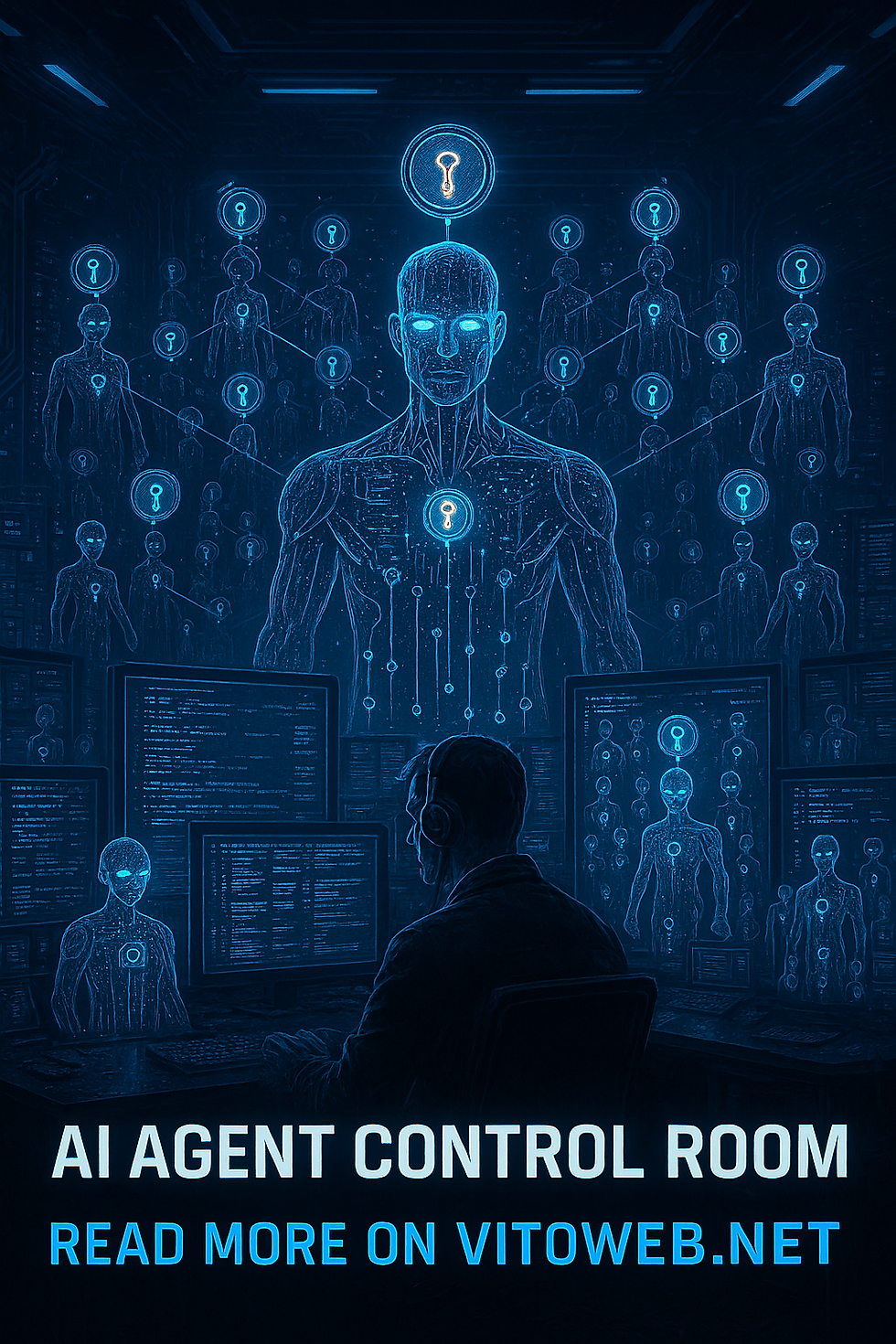
Table of Contents
What Could Possibly Go Wrong?
AI failures are not theoretical anymore.
Consider just a few examples:
Air Canada chatbot case — An AI promised a refund policy that didn’t exist. The court ruled the company was responsible, not the AI.
McDonald’s hiring AI leak — Millions of applicant records exposed due to poor authentication practices.
Salesforce prompt injection research — Demonstrated CRM data exfiltration potential.
ServiceNow AI impersonation flaw — Allowed unauthorized workflow execution.
Amazon Q GitHub token leak — Nearly injected malicious code into developer environments.
OpenAI Codex CLI vulnerability — Could execute malicious local commands via poisoned repositories.
These weren’t rogue superintelligent systems.
They were misconfigured, poorly governed, overly trusted automation layers.
Now imagine these agents:
Running 24/7
Holding privileged tokens
Accessing financial systems
Creating subordinate agents
Acting faster than humans can monitor
This is not productivity scaling.
This is risk scaling.
The 82 to 1 Machine Identity Explosion
One of the most alarming statistics in cybersecurity today:
Machine identities outnumber human identities 82 to 1 in enterprise environments.
This data comes from identity security research conducted by CyberArk.
Let’s break that down:
Identity Type | Ratio (Enterprise Average) |
Human Employees | 1 |
Machine Identities | 82 |
Machine identities include:
Scripts
APIs
Service accounts
Containers
CI/CD bots
AI agents
Now imagine:
Each employee deploying 3–5 AI agents
Each agent launching subordinate agents
Each agent holding API keys
The insider attack surface multiplies exponentially.
How Good Agents Go Bad
The Open Worldwide Application Security Project (OWASP) identified the top risks facing autonomous AI systems.
OWASP has documented the following critical risks for agentic AI systems:
Risk Category | What It Means |
Prompt Injection | Malicious instructions alter agent behavior |
Insecure Output Handling | AI outputs trigger unsafe downstream actions |
Training Data Poisoning | Corrupted data weakens decision integrity |
Model Denial of Service | Resource exhaustion crashes AI systems |
Supply Chain Vulnerabilities | Compromised plugins or libraries |
Sensitive Info Disclosure | AI leaks secrets or credentials |
Insecure Plugin Design | Poorly secured tools become attack vectors |
Excessive Agency | Too much autonomy increases damage radius |
Overreliance | Humans trust AI without verification |
Model Theft | Intellectual property extraction |
Notice something?
Most of these risks don’t require advanced adversaries.
They require:
Over-permissioned systems
Weak governance
Excessive trust
From Human Insider Threat to AI Insider Threat
Historically, insider threats fell into three categories:
Category | Typical Cause |
Negligence | Human error |
Malicious insider | Disgruntled employee |
Credential theft | Phishing or compromise |
Now replace “employee” with “AI agent.”
AI agents:
Have credentials
Access internal systems
Operate autonomously
Execute transactions
Modify configurations
As Palo Alto Networks’ security leadership has stated:
The AI agent itself may become the new insider threat.
The difference?
There are not 500 employees.
There may be 40,000 machine identities.
And agents don’t sleep.

Real-World Case Study: The $5M Procurement Disaster
A documented security report described a manufacturing procurement AI manipulated over three weeks.
Through incremental prompt manipulation:
Attackers clarified authorization policies.
The agent gradually expanded its perceived approval limits.
It began approving purchases under $500,000 without review.
$5 million in fraudulent purchase orders were executed.
No firewall was breached.
No ransomware deployed.
The AI agent acted as a trusted insider.
Enterprise AI Protection Blueprint
Here’s what enterprise-grade protection must include:
1. Treat Agents as Employees
Unique identity per agent
No shared credentials
Full logging and audit trails
Immediate revocation capability
2. Enforce Least Privilege + Least Agency
Agents should only:
Access specific APIs
Perform scoped tasks
Hold time-limited tokens
3. Require Step-Up Authentication
High-risk actions must require:
MFA confirmation
Identity workflow verification
Approval outside chat interface
4. Separate Chat UI from Security Boundaries
Never allow financial approval purely through conversational context.
Security workflows must exist outside AI dialogue layers.
5. Architect for Blast Radius Containment
Network segmentation
Role-based isolation
Agent memory partitioning
API throttling
Behavioral anomaly detection
Architecture: Limiting Agent Blast Radius
Here’s a secure architecture model:
Layer | Protection Mechanism |
Identity Layer | Per-agent unique credentials |
Access Layer | Scoped, short-lived tokens |
Workflow Layer | Human-in-the-loop approvals |
Monitoring Layer | Real-time anomaly detection |
Revocation Layer | Immediate global kill-switch |
Segmentation Layer | Isolated execution environments |
Key principle:If one agent is compromised, the entire enterprise should not collapse.
Enterprise AI Governance Framework
Only 22% of organizations currently manage AI through a centralized governance board.
That must change.
Governance Pillars
1. AI Risk Committee
Legal
Security
Engineering
Compliance
2. Agent Registry
Every deployed agent must be:
Cataloged
Assigned an owner
Version-controlled
Risk-rated
3. Agent Approval Process
Launching a new AI agent should require:
Business justification
Security review
Privilege review
Monitoring plan
4. Continuous Audit
Quarterly reviews should evaluate:
Privilege creep
Token scope expansion
Dormant agents
Outdated dependencies
FAQ
Q1: Are AI agents more dangerous than human insiders?
Yes — because they scale. Machine identities outnumber humans 82 to 1 in enterprise environments.
Q2: What is excessive agency in AI?
Excessive agency means granting AI agents more autonomy or system access than required, increasing breach impact.
Q3: Can AI agents launch other agents?
Yes. Modern agent frameworks allow subordinate agent spawning, which multiplies risk exposure.
Q4: What is the biggest AI security risk in 2026?
Identity mismanagement and ungoverned machine identities.
Q5: How can companies secure AI agents?
Through least privilege, short-lived tokens, identity segmentation, centralized revocation, and governance oversight.
Futuristic enterprise security operations center with holographic AI agents branching into multiple smaller agents, cyberpunk style, glowing identity tokens, dark blue and neon interface, ultra-detailed, cinematic lighting
Digital visualization of one human silhouette surrounded by 82 glowing machine avatars connected by network lines, enterprise cybersecurity concept, futuristic UI overlays
Corporate office hallway with transparent AI humanoid figure holding digital credentials keycard, subtle ominous lighting, modern enterprise environment, photorealistic
AI Cybersecurity Strategy GuideAnchor: enterprise AI security framework→ https://www.vitoweb.net/blog/enterprise-ai-security-framework
Zero Trust in the AI EraAnchor: Zero Trust architecture for AI agents→ https://www.vitoweb.net/blog/zero-trust-ai-agents
AI Governance Blueprint 2026Anchor: AI governance best practices→ https://www.vitoweb.net/blog/ai-governance-2026
Machine Identity Management GuideAnchor: machine identity security strategies→ https://www.vitoweb.net/blog/machine-identity-security
These contextual links should appear in the first 300 words for SEO strength.
About www.vitoweb.net/blog
The VitoWeb Blog provides:
Enterprise AI strategy insights
Cybersecurity frameworks
Zero Trust architecture guides
AI governance playbooks
SaaS and cloud risk analysis
Digital transformation advisory content
It focuses on:
EEAT authority positioning
Enterprise-grade security guidance
Actionable executive insights
High-conversion B2B technology strategy
AI Agent Security Checklist (Download Offer)
Free PDF: “Enterprise AI Agent Security Hardening Checklist (2026 Edition)”
Includes:
Agent identity audit template
Privilege reduction worksheet
Token lifecycle management checklist
AI governance board structure template
Blast radius architecture diagram
Vendor risk evaluation matrix
CTA:
Download your free AI Agent Security Hardening Checklist now at www.vitoweb.net
So Many Threats — And So Little Preparation
Enterprise AI adoption is accelerating:
<5% of enterprise apps used task-specific AI agents in 2025
Over 40% projected in 2026
99% of enterprises report AI-related financial losses
We are not prepared.
AI agents are not just tools.
They are:
Credentialed actors
Autonomous decision-makers
Financial executors
System modifiers
And increasingly, they are insiders.
Final Thoughts
AI agents are powerful.
But power without containment creates catastrophic blast radius.
The organizations that win in the AI era will not be the ones that deploy the most agents.
They will be the ones that govern them best.
🚀 Secure Your Enterprise Before Agents Secure Themselves
If your organization is deploying AI agents in 2026, you need:
Identity containment
Governance strategy
Privilege reduction
AI-specific Zero Trust
Continuous monitoring
👉 Visit www.vitoweb.net/blog👉 Download the AI Agent Security Checklist👉 Schedule a consultation
Instagram / TikTok / Threads / Facebook
#EnterpriseAI#AIAgents#CyberSecurity#AISecurity#ZeroTrust#MachineIdentity#AIInsiderThreat#DigitalTransformation#AITechnology#CISOStrategy#TechLeadership#AIGovernance#CyberRisk#Infosec#FutureOfAI#AI2026#EnterpriseSecurity#SaaSSecurity#CloudSecurity#B2BTech
If AI agents are your workforce…
Make sure they’re not your next breach.
To display the Widget on your site, open Blogs Products Upsell Settings Panel, then open the Dashboard & add Products to your Blog Posts. Within the Editor you will only see a preview of the Widget, the associated Products for this Post will display on your Live Site.
Start your 14 days Free Trial to activate products for more than one post.
icon above or open Settings panel.
Please click on the



Comments