Agentic AI Is Advancing Fast — But Transparency and Security Are Falling Behind
- vitowebnet izrada web sajta i aplikacija
- Feb 27
- 6 min read

Agentic AI is rapidly entering the mainstream of artificial intelligence. With major investments, new enterprise tools, and autonomous browser-based systems, AI agents are no longer experimental — they are operational.
But according to a major academic review, transparency, governance, and security safeguards are not keeping pace.
As organizations rush to deploy AI agents capable of acting independently across systems, the question is no longer what they can do — but whether we understand the risks well enough to control them.
At Vitoweb, where we work with businesses on structured AI implementation and governance frameworks, we’ve seen firsthand that autonomy without oversight can quickly become liability.
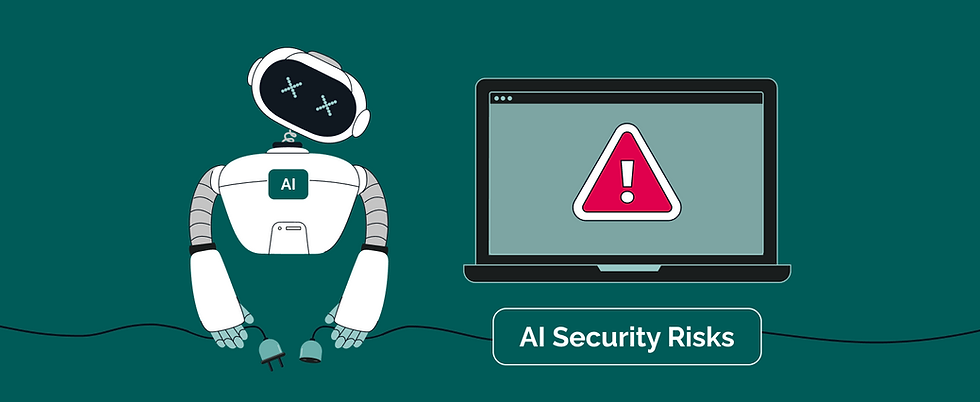
The Rise of Agentic AI
Agentic AI refers to systems that go beyond simple text responses. Unlike traditional chatbots, AI agents:
Connect to external tools and databases
Execute multi-step workflows
Interact with websites and applications
Operate with partial autonomy
Examples include enterprise copilots, AI-powered browsers, and workflow automation agents.
Many of these systems rely on large foundation models such as GPT, Claude, or Gemini — but they extend those models with tool access and task execution capabilities.
That expansion dramatically increases both power and risk.
A Major Academic Review Raises Concerns
Researchers from the University of Cambridge, MIT, Harvard, Stanford, and other institutions recently published a 39-page report analyzing 30 widely deployed agentic AI systems.
Their conclusion: the current ecosystem suffers from major gaps in transparency and disclosure.
The report highlights:
Limited documentation of safety mechanisms
Minimal third-party testing disclosures
Inconsistent monitoring capabilities
Poor clarity around risk mitigation
Weak or undocumented stop controls
In many cases, it is unclear whether execution traces are logged or auditable. Some systems provide no detailed usage monitoring. Others lack clearly documented methods to halt autonomous processes mid-operation.
For enterprises operating under compliance frameworks and regulatory scrutiny, this is a serious governance issue.
The Transparency Problem
One of the most troubling findings is how difficult it is to determine what protections exist — or don’t exist.
Across eight disclosure categories examined in the study, most vendors provided little to no public information.
Examples of missing transparency include:
Whether third-party safety testing was conducted
Whether sandboxing environments are used
How agents identify themselves to websites
Whether execution activity is cryptographically verifiable
What safeguards exist against prompt injection
Many agents also fail to clearly signal that they are AI when interacting online. This creates tension between automation tools and broader web governance norms.
For organizations deploying agents in customer-facing environments, this creates reputational and legal exposure.
Control and Observability Gaps
Some enterprise platforms reportedly lack documented stop options for autonomous agents.
In certain cases, administrators can only stop all agents at once — rather than halting a specific malfunctioning process.
That kind of limitation becomes particularly dangerous when:
Agents are connected to financial systems
Automation touches customer data
Multi-step workflows modify operational databases
Effective AI deployment requires observability, granular control, and deterministic guardrails.
This is why structured governance frameworks — not just model selection — are essential when implementing enterprise AI systems.
You can explore structured enterprise AI governance approaches at:

Vendor Responses and Disputes
Some companies referenced in the report have challenged its findings.
Certain vendors claim inaccuracies in how their safety documentation was interpreted.
Others state that vulnerability disclosures were responsibly handled and resolved.
Some argue that litigation references do not equate to safety failures.
It’s important to note that the academic study focused primarily on publicly available documentation rather than invasive system testing.
Still, the broader takeaway remains: documentation, clarity, and accountability vary significantly across providers.
Why Agentic AI Is Different
Traditional chatbots generate text.
Agentic systems act.
They can:
Send emails
Modify records
Query enterprise databases
Automate purchasing processes
Interact with external web services
This shift from passive generation to active execution introduces new threat vectors:
Prompt injection attacks
Escalated system permissions
Unauthorized data access
Workflow manipulation
Budget overconsumption
As autonomy increases, so does systemic risk.
The Governance Challenge Ahead
The researchers warn that governance challenges will grow as agentic capabilities expand.
Key structural issues include:
Fragmented AI ecosystems
Lack of agent-specific evaluation standards
Weak alignment between web protocols and AI automation
Inconsistent safety benchmarking
We are entering a phase where AI agents are not just tools — they are semi-autonomous operators embedded into digital infrastructure.
That demands:
Clear accountability frameworks
Transparent documentation standards
Robust monitoring systems
Built-in kill switches
Independent evaluation protocols
Enterprise Adoption: Proceed With Structure, Not Hype
Agentic AI offers enormous potential:
Streamlined operations
Reduced manual workloads
Faster execution cycles
Enhanced customer support automation
But without structured deployment strategies, those same systems can introduce unpredictable operational risk.
Businesses should approach agentic AI with:
Defined governance policies
Risk mapping before deployment
Access control segmentation
Continuous monitoring
Clear human override capabilities
AI autonomy must be paired with operational discipline.
At Vitoweb, we focus on building AI systems that are not only powerful — but governable, auditable, and strategically aligned with business objectives.
Learn more about responsible AI implementation:👉 https://www.vitoweb.net

Time for Developer Accountability
Innovation is moving quickly.
But transparency and safety must move faster.
Developers of agentic AI systems need to:
Clearly document limitations
Disclose evaluation methodologies
Provide transparent monitoring mechanisms
Offer granular stop controls
Engage openly with independent researchers
Agentic AI will shape enterprise automation for the next decade.
Whether it becomes a competitive advantage — or a security liability — depends on how responsibly it is built and deployed today.





Agentic AI Risks: Security, Transparency & Enterprise Governance
Alternative (more traffic-focused):Agentic AI Security Risks: What Enterprises Must Know
Agentic AI is advancing fast, but transparency and security gaps remain. Learn the risks, governance challenges, and how enterprises can deploy AI responsibly.
agentic AI risks
agentic AI security
AI agent transparency
enterprise AI governance
autonomous AI systems
AI agent compliance
AI automation risks
AI security framework
AI oversight and monitoring
AI regulatory challenges
responsible AI deployment
agentic-ai-security-risks-enterprise-governance
Core AI & Tech
#AgenticAI#ArtificialIntelligence#AIsecurity#AIGovernance#EnterpriseAI#AutonomousSystems#GenerativeAI#AITechnology
Business & Strategy
#DigitalTransformation#TechLeadership#AIForBusiness#Automation#RiskManagement#Compliance
SEO / Marketing
#TechTrends#Innovation#FutureOfWork#CyberSecurity
Frequently Asked Questions About Agentic AI
1. What is agentic AI?
Agentic AI refers to artificial intelligence systems that can autonomously execute multi-step tasks, access external tools or databases, and operate beyond simple text-based responses. Unlike traditional chatbots, agentic AI systems can take actions such as sending emails, updating records, or interacting with websites.
2. Why is agentic AI considered risky?
Agentic AI introduces new risks because it can act independently within enterprise systems. Potential issues include prompt injection attacks, unauthorized data access, weak monitoring controls, lack of transparency, and insufficient stop mechanisms.
3. How can enterprises reduce agentic AI security risks?
Organizations can reduce risk by implementing strong governance frameworks, enforcing access controls, enabling execution monitoring, conducting third-party audits, and ensuring human override capabilities are built into agent workflows.
4. What is AI transparency in agentic systems?
AI transparency refers to clear documentation about how an AI agent operates, what data it accesses, what safeguards are in place, and whether independent safety evaluations have been conducted.
5. Is agentic AI regulated?
Regulation of agentic AI is still evolving. While general AI governance frameworks exist, agent-specific oversight standards are still developing, making internal enterprise governance especially important.
FAQ Schema Markup (JSON-LD for Rich Snippets)
Add this to your page header or before the closing </body> tag:
<script type="application/ld+json">
{
  "@context": "https://schema.org",
  "@type": "FAQPage",
  "mainEntity": [
    {
      "@type": "Question",
      "name": "What is agentic AI?",
      "acceptedAnswer": {
        "@type": "Answer",
        "text": "Agentic AI refers to artificial intelligence systems that can autonomously execute multi-step tasks, access external tools or databases, and operate beyond simple text-based responses."
      }
    },
    {
      "@type": "Question",
      "name": "Why is agentic AI considered risky?",
      "acceptedAnswer": {
        "@type": "Answer",
        "text": "Agentic AI introduces risks because it can act independently within enterprise systems, potentially leading to prompt injection attacks, unauthorized data access, weak monitoring controls, and insufficient stop mechanisms."
      }
    },
    {
      "@type": "Question",
      "name": "How can enterprises reduce agentic AI security risks?",
      "acceptedAnswer": {
        "@type": "Answer",
        "text": "Enterprises can reduce risk by implementing governance frameworks, enforcing access controls, enabling execution monitoring, conducting third-party audits, and building human override mechanisms into AI workflows."
      }
    },
    {
      "@type": "Question",
      "name": "What is AI transparency in agentic systems?",
      "acceptedAnswer": {
        "@type": "Answer",
        "text": "AI transparency refers to clear documentation about how an AI agent operates, what data it accesses, what safeguards exist, and whether independent safety evaluations have been conducted."
      }
    },
    {
      "@type": "Question",
      "name": "Is agentic AI regulated?",
      "acceptedAnswer": {
        "@type": "Answer",
        "text": "Regulation of agentic AI is still evolving. While general AI governance frameworks exist, agent-specific oversight standards are still developing."
      }
    }
  ]
}
</script>
To display the Widget on your site, open Blogs Products Upsell Settings Panel, then open the Dashboard & add Products to your Blog Posts. Within the Editor you will only see a preview of the Widget, the associated Products for this Post will display on your Live Site.
Start your 14 days Free Trial to activate products for more than one post.
icon above or open Settings panel.
Please click on the



Comments